USN
(1922–1942)
Clemson-class destroyer
(1943-1945)
IJN
Patrol Boat
1,215 Tons (As Built)
1,680 Tons (Patrol Boat)
314' 5" x 31' 9" x 9' 4"
(As Built 1920)
4 x 4" guns
1 x 3" gun
12 x 21" torpedo tubes
(Patrol Boat Sept 1943)
1,680 Tons
2 x Dutch 75mm guns
2 x 12.7mm MG
2 x 6.5mm MG
72 x depth charges
(Patrol Boat June 1945)
2 x 76.2mm AA guns
14 x 25mm AA guns
4 x 13.2mm MG
2 x
6.5mm MG
4 x torpedoes
72 x depth charges
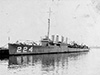
USN circa 1922–1939
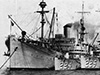
USN circa 1922–1939
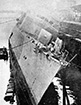
USN February 22, 1942
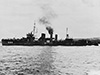
USN 1945
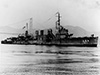
USN March 1946
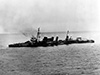
USN May 24, 1946
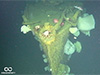
Ocean Infinity
August 2024 |
Ship History
Built by William Cramp & Sons in Philadelphia. Laid down September 9, 1919 as a Clemson-class destroyer. Launched March 4, 1920 as USS Stewart (DD-224) named for Rear Admiral Charles Stewart (1778–1869). Commissioned September 15, 1920 in the U.S. Navy (USN). Assigned to Destroyer Division 37 (DesDiv 37) a reserve division of Destroyer Squadron 3 (DesRon 3) in the Atlantic Fleet. During October 1920 assigned to DesDiv 39 and conducted coastal patrols for a year.
On October 12, 1921 joined Destroyer Squadron, Atlantic. On January 5, 1922 departs Charleston bound for the Caribbean Sea. On January 6, 1921 suffers an accidental collision with USS Hopkins (DD-249) and sustains minor damage but remains on patrol and participates in fleet exercises until the end of February 1922 then departs for Philadelphia for repairs and was fitted with a echo sounder.
On June 20, 1922 departs Newport with destroyer tender USS Black Hawk (AD-9) as one of twelve destroyers that steam via the Mediterranean Sea and Indian Ocean to join the Asiatic Fleet. On August 26, 1922 arrives Chefoo (Yantai) and begins summer patrols in China and winters in the Philippines.
On September
2, 1923 departs Dalian bound for Yokosuka arriving three days later to participate in relief operations after the Great Kanto earthquake and remains for nineteen days then returns to China. On September 24, 1923 arrives Shanghai and remains for a month then departs for the Philippines. On October 28, 1923 arrives Olongapo then to Cavite for repairs until November 18, 1923.
During 1924 performs marine surveys with her echo sounder. Between May 25, 1924 and June 16, 1924 supports a flight of U.S. Army Air Corps (USAAC) Douglas World Cruiser seaplanes flying around the world supporting the flight between Japan and Shanghai. On June 25, 1924 placed under the command of LtCdr Charles L. Best.
During January 1925
transports U.S. Marines from 4th Marine Regiment to Shanghai and for the next two years arguments gunboat patrols on the Yangtze River and coastal area near Canton to protect American interests during anti-foreigner disturbances.
In 1926, placed under the command of LtCdr Carleton F. Bryant. During September 1926 ordered to the patrol and operates on the Yangtze River between Shanghai and Hankou with USS Pope (DD-225) and in one incident two sailors aboard were slightly wounded by gunfire from shore but did not return fire. On September 10, 1926 with gunboat USS Palos (PG-16) and minesweeper USS Pigeon (ASR-6) came under rifle and artillery fire and returns fire with small arms and fires a single 4" shell and hostile fire ceases.
On February 18, 1927 departs Manila Bay with USS Paul Jones (DD-230) to search for missing SS Elkton until the the search was abandoned six days later without results. On March 24, 1927 in Shanghai when the Nanking Incident began and operates on the Yangtze River based at Wuhu, Nanking, Shanghai, and Chenglin. On March 27, 1927 bound for Wuhu fired on wounding three sailors. On November 5, 1927 accidentally collided with SS Luen Ho on the Yangtze River but sustained only minor damage to the side.
During late January 1932 operating off the coast of China when Japanese attacks began in Shanghai and ordered to Swatow (Shantou) then Amoy. On February 26, 1928 returns to Shanghai. On September 30, 1928 placed under the command of LtCdr Ryland D. Tisdale. On October 31, 1929 placed under the command of Cdr Laurance S. Stewart. On May 17, 1930 placed under the command of LtCdr Samuel P. Jenkins.
On March 23, 1932 accidentally collides with
British sloop HMS Sandwich and two Chinese barges with a length of anchor chain wound around around Stewart's port propeller causing damage that requires repairs. On June 25, 1932 placed under the command of LtCdr Carleton F. Bryant.
During January 1934 Stewart began overhaul and repairs at Cavite. On February 10, 1934 a fire started aboard that was quickly extinguished with repairs completed by March. On May 9, 1934 placed under the command of LtCdr John B. Mallard. On July 14, 1934 while at anchor at Chefoo dragged her anchor and collided with Chinese warship Chuyku and sustains minor damage.
During the Second Sino-Japanese War, patrols between Tsingtao and Shanghai between August 15, 1937 until October 17, 1937 to protect American interests. On October 1, 1937 Japanese planes dropped several bombs near Stewart. On October 17, 1937 departs on a mail run to Yokohama then returns to China at the end of the month.
On December 18, 1937 departs Shanghai transporting film footage of the Japanese sinking USS Panay (PR-5). Between February 21, 1938 to March 21, 1938 returns to China to patrol. On July 30, 1938 departs Manila Bay with USS Pope (DD-225) and USS Parrott (DD-218) on a search for missing Pan American M-130 "Hawaii Clipper" NC14714 without result.
On June 3, 1939 departs for another patrol off China that ends on September 4, 1939 then returns to the Philippines to patrol. On April 5, 1940 arrives Cavite for overhaul until June. Afterwards, serves as a plane guard for seaplanes between Guam and the Philippines. On July 7, 1940 departs the Philippines for her final patrol in China and returns on September 23, 1940 and continues to patrol in the Philippines.
On May 18, 1940 placed under the command of LtCdr Harold Page Smith, USNA class of 1924. On November 27, 1941 receives a "war warning" and Stewart is ordered to Tarakan with USS Marblehead (CL-12) plus escorting destroyers USS Barker (DD-213), USS Bulmer (DD-222), USS Paul Jones (DD-230) and USS Parrott (DD-218) and arrives two days later. The warships remain at Tarakan until the start of hostilities.
Wartime History
On December 8, 1941 at the start of the Pacific War with USS Langley (CV-1), USS John D. Edwards (DD-216), and fleet oilers
USS Pecos (AO-6) and USS Trinity (AO-13) joined by heavy cruiser USS Houston (CA-30) and light
cruisers USS Boise (CL-47). On December 15, 1941 the convoy
arrives at Balikpapan then depart bound for Australia. On December 28, 1941 arrives Darwin Harbor.
On January 9, 1942 joins of Task Force 5 (TF 5) and departs Darwin Harbor with USS Boise (CL-47) and USS Marblehead (CL-12) escorted by five destroyers USS Stewart (DD-224), USS Bulmer (DD-222), USS Parrott (DD-218), USS Barker (DD-213) and USS Pope (DD-225) escorting SS Bloemfontein transporting hastily re-stowed supplies, artillery and of the Headquarters Battery, 26th Field Artillery Brigade and the 1st Battalion, 131st Field Artillery that had arrived on the Pensacola Convoy bound for Surabaya.
On January 20, 1942 Stewart and USS Barker (DD-213) are ordered to Ratai Bay on Sumatra to meet convoy MS 2 including RMS Aquitania transporting Australian soldiers with HMAS Canberra and HMAS Vampire bound for Singapore. Due to the threat of Japanese air attacks, the troops are transfered to six smaller Dutch KPM-steamers and one small British ship. The new convoy designated MS-2A departs for Singapore arriving January 24, 1942.
On January 30, 1942 escorts USS Marblehead (CL-12). On February 2, 1942 anchors in Bunda Roads and the next day assigned to the American-British-Dutch-Australian Flotilla (ABDAFLOAT) Striking Force under Rear Admiral Karel Doorman including heavy cruiser USS Houston (CA-30), light cruisers Hr. Ms. De Ruyter (flagship), Hr. Ms. Tromp, USS Marblehead (CL-12) and destroyers USS Barker (DD-213), USS Bulmer (DD-222), USS Paul Jones (DD-230), USS Whipple (DD-217), USS Pillsbury (DD-227), USS John D. Edwards (DD-216), USS Stewart (DD-224), Hr. Ms. Banckert, Hr. Ms. Piet Hein (PH) and Hr. Ms. Van Ghent.
On February 4, 1942 after midnight departs Bunda Roads to intercept anothr Japanese convoy spotted at the southern entrance of the Macassar Strait but due to air attacks during the Battle of Makassar Strait and aborts the sortie. At 12:25pm the warships turn westward and Steward and USS John D. Edwards (DD-216) are assigned to screen for damaged USS Marblehead (CL-12). At 2:15pm they are joined by damaged USS Houston (CA-30) and depart bound for Tjilatjap arriving two days later.
On February 14, 1942 joins the American-British-Dutch-Australian (ABDA) warships to intercept Japanese forces of northern Sumatra. On February 15, 1942 participates in the Gaspar Strait Sortie and due to Japanese air attacks aborts and withdraws. On February 16, 1942 detached to refuel at Ratai Bay on Sumatra.
On February 19, 1942 during the Battle of Badung Strait (Bali Sea Battle) Stewart was the lead destroyer in the second group and engaged in several brief engagements in the Badung Strait and came under accurate fire from Japanese destroyers Oshio and Asashio and damaged at roughly Lat 7°18'S, Long 112°46'E. Gunfire hit her lifeboat, torpedo rach and galley with a hit below the waterline causing flooding in the steering engine room and despite flooding that results in 2' of seawater aboard but maintains speed and remains in column until the engagement ends with only one casualty then departs for Surabaya arriving the next morning. For his actions, LtCdr Harold Page Smith earned the Navy Cross.
On February 22, 1942 damaged entering a Dutch floating drydock at Surabaya when improperly shored on blocks and rolled on her port side that bent her propeller shafts and sustains hull damage. On March 1, 1942 hit by a bomb at Surabaya on Java. Unable to withdraw, the destroyer is prepared with demolition charges inside.
On March 2, 1942 at Surabaya scuttled with demolition charges inside and the surrounding drydock is demolished to cause maximum damage. On March 25, 1942 stricken off the Navy registered. Afterwards, her name was given to a new destroyer USS Stewart (DE-238).
The destroyer was abandoned and remained submerged for nearly a year. During February 1943, the sunken drydock and destroyer were refloaded by the Imperial Japanese Navy (IJN), 102nd Naval Construction Department at Surabaya. Converted into a patrol boat with her two forefunnels trunked together with three stacks. Her American armament was removed and replaced by two Dutch 75mm AA guns, two 12.7mm machine guns, two 6.5mm machine guns and 72 depth charges with thrower, rails and sonar and anti-submarine equipment.
On June 15, 1943 designated Dai-102-Gō Shōkaitei / Patrol Boat No. 102 (PB-102) under the command of Lt Mizutani Tamotsu. During September 1943, the vessel is fully cleaned and fumigated before a crew is assgined. Commissioned September 20, 1943
in the Imperial Japanese Navy (IJN). On September 28, 1943 departs Surabaya on a trail run and returns the next day. On October 11, 1943 at 9:00am departs
Surabaya for weapons tests and returns that evening.
On October 18, 1943 departs
Surabaya escorting oilers Kenyo and Nichiei Maru bound for Balikpapan arriving two days later and the same day departs escorting Genyo and Azuma Maru bound for Truk and while enroute spots a periscope and conducts a depth charge attack without results. On October 22, 1943 returns to Balikpapan. On October 25, 1943 departs Balikpapan escorting Kenyo Maru then detaches and returns in the evening.
On August 24, 1944 at 6:30am USS Harder (SS-257) and USS Hake spot Patrol boat No. 102 and Kaibokan CD-22 leaving Dasol Bay. They misidentified Patrol boat No. 102 with three stacks as a old Thailand destroyer Phra Ruang (formally HMS Radiant) and They also misidentified CD-22 as a minesweeper. USS Hake (SS-256) closed to attack, the destroyer turned away toward Dasol Bay and the submarine broke off her approach. Meanwhile, the Japanese spot two periscopes CD-22 released depth charges that sank USS Harder (SS-257). That same day, PB-102 has her no. 2 boiler inoperative but it is repaired within five hours.
On May 17, 1945 at 7:30am Rear Admiral Kiyota Takahiko transfers his flag aboard and becomes the flagship of the Kure Guard Unit. In late May, her Type 13 air-search radar is replaced. In early June 1945 torpedo drop collars are added. On June 11, 1945 at 9:02am departs Kure with 134 pilot and ground crew from Saeki Air Group embarked bound for Saeki arriving at 3:41pm an anchors at Onyu Jima pier at 6:01pm. On June 21, 1945 at Saeki most of her crew are assigned shore duties.
On August 15, 1945 at Saeki and ordered to Kure when Japan surrendered.
Postwar
In late August 1945 in Hiro Bay east of Kure inspected by three U.S. Navy (USN) officers hoist the American flag to reclaim the ship. The Patrol Boat is in decrepit condition and infested with rats and the Japanese are ordered to clean, fumigate and paint the ship.
On October 28, 1945 in Hiro Bay the U.S. Navy prize crew is embarked. On October 29, 1945 recommissioned in the U.S. Navy (USN) as USS DD-224 since the name Stewart is still assigned to USS Stewart (DE-238) and placed under the command of Lieutenant Commander Harold H. Ellison with by Vice Admiral Jesse B. Oldendorf in attendence. During the ceremony, USS Compton (DD-705) was along side to starboard.
On November 2, 1945 departs Kure for engine trials and reaches 20 knots. On November 8, 1945 departs Hiro Bay bound for Okinawa. On November 10, 1945 arrives Buckner Bay and refueled. On November 11, 1945 departs with USS Wesson (DE-184) bound for Guam but during the voyage suffers fuel problems and was taken under tow by the destroyer to Apra Harbor on Guam and repaired. On December 10, 1945 departs Apra Harbor with SC-1036 bound for Eniwetok. On December 20, 1945 arrives Eniwetok and taken under tow by ATR-20.
On January 4, 1946 departs
Eniwetok under tow by tug USS ATR-35 bound for Kwajalein arriving four days later. On January 27, 1946 departs Kwajaleinotwed by USS ATR-86 and USS ATR-64 bound for Pearl Harbor. On February 18, 1946 arrives Pearl Harbor and three days later taken under tow by USS Achomawi (ATF-148) bound for the west coast.
On March 5, 1946 take under tow by USS ATR-23 and at 11:00am that same day arrives San Francisco. On March 26, 1946 towed to Oakland. On April 17, 1946 removed from the Navy list. On April 25, 1946 placed under the command of Ensign Russell W. Dudley. On May 23, 1946 at Oakland decommissioned from the Navy. While in the United States, visited by her former commander LtCdr Charles L. Best who commander June 25, 1924–1926.
Fate
On May 24, 1946 towed off San Francisco and sunk as a target by U.S. Navy (USN) aircraft including F4U Corsairs and F6F Hellcats that fire rocket that cause the ship to sink to the port side.
Shipwreck
On August 1, 2024 Ocean Infinity deployed three autonomous underwater vehicles (AUVs) each equipped with high-resolution synthetic aperture sonar (HiSAS) to search for the shipwreck as a test of their equippment.
The collaborative effort was between Ocean Infinity, the Air/Sea Heritage Foundation, SEARCH, National Oceanic & Atmospheric Administration (NOAA) and the Naval History and Heritage Command (NHHC). For the search, Ocean Infinity was issued permits to conduct a non-disturbance from the National Oceanic & Atmospheric Administration (NOAA) and U.S. Navy (USN).
Over a 24 hour period, the three AUVs searched a wide area of the seafloor and found the shipwreck in the Bodega Canyon inside the National Oceanic & Atmospheric Administration (NOAA) Cordell Bank National Marine Sanctuary at a depth of 3,500' / 1,067m roughly 30 miles off the coast of California. The shipwreck was upright and the bow and stern were documented with video.
Awards
For her World War II service, USS Stewart (DD-224) earned two battle stars.
References
Reportedly, when Patrol Boat No. 102 was spotted by U.S. aircraft they identified it as an old American destroyer operating in Japanese controlled areas and was dubbed the "Ghost ship of the Pacific".
Naval History and Heritage Command (NHHC) - Stewart (Destroyer No. 224)
Naval History and Heritage Command (NHHC)
- USS Stewart (DD-224) Gallery
NavSource - USS Stewart (DD-224)
Combined Fleet - IJN Patrol Boat No. 102: Tabular Record of Movement
FindAGrave - Adm Harold Page Smith (photos, grave photo)
Hall of Valor - Harold Page Smith (Navy Cross Citation February 19–20, 1942)
"The President of the United States of America takes pleasure in presenting the Navy Cross to Lieutenant Commander Harold Page Smith, United States Navy, for extraordinary heroism and distinguished service in the line of his profession as Commanding Officer of the Destroyer U.S.S. Stewart (DD-224), in action against a greatly superior Japanese Naval force in the Badoeng Strait, off the Island of Bali, Netherlands East Indies, on the night of 19 – 20 February 1942. Although under heavy fire from the enemy, Lieutenant Commander Smith pressed home the attack which resulted in severe damage to the enemy, while receiving minor damage to his own ship and only one casualty to his personnel. The conduct of Lieutenant Commander Smith throughout this action reflects great credit upon himself, and was in keeping with the highest traditions of the United States Naval Service."
U.S. Naval Institute - Smith, Harold Page, Adm., USN (Ret.) (1904–1993)
Cordell Bank National Marine Sanctuary - Sanctuary History
"Regarding historic maritime heritage resources in the sanctuary, records indicated the ex-USS Stewart (DD-224) was sunk offshore. The vessel was a United States Navy destroyer that was captured during World War II and commissioned into the Japanese Navy in 1943 as Patrol Boat 102. Recaptured at the end of the war, Stewart was recommissioned into the U.S. Navy in 1945; later scuttled in Bodega Canyon. This vessel was rediscovered in 2024 in the sanctuary approximately 30 miles from shore by researchers operating under a sanctuary permit."
USS Stewart Press Release, October 1, 2024 [PDF]
New York Times "Wreck of ‘Ghost Ship of the Pacific’ Found Off California" by Michael Greshko October 1, 2024
U.S. Naval Institute "‘The Ghost Ship of the Pacific’ by James P. Delgado February 2025 Volume 39, Number 1
Contribute
Information
Are you a relative or associated with any person mentioned?
Do you have photos or additional information to add?
Last Updated
March 4, 2026
|

Photo Archive

3,500' /
1,067m |