|  |
|
| |
|
| Missing In Action (MIA) | Prisoners Of War (POW) | Unexploded Ordnance (UXO) |
| Chronology | Locations | Aircraft | Ships | Submit Info | How You Can Help | Donate |
|
| USN Northampton Class Heavy Cruiser 9,050 Tons 569' x 600' 3" x 66' 1" 9 × 8" (3x3) 4 × 5" (4x1) 8 × .50 machine guns 6 × 21" torpedo tubes 4 × SOC floatplanes 2 x catapults 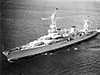 USN October 1935 |
Ship History Built by Newport News Shipbuilding in Newport News, Virginia. Laid down May 1, 1928. Launched September 7, 1929. Commissioned June 17, 1930 as USS Houston CL-30 with Captain Jesse Bishop Gay in command. On July 1, 1931 redesignated as a heavy cruiser as CA-30. Prewar After conducting a shakedown cruise in the Atlantic, Houston returned to the United States in October 1930. Next on January 31, 1931 departed for Shanghai landing U.S. Marine Corps (USMC) and U.S. Navy (USN) personnel and patrolling the area. During 1933, Houston made a good will tour in the Philippines. On November 17, 1933 relieved by USS Augusta (CA-31) and returned to San Francisco. On July 1, 1934 at Annapolis Houston hosted U.S. President Franklin D. Roosevelt. Cruised the Caribbean to Portland via Hawaii, then returned to San Diego on May 15, 1935. Next cruised off Alaskan then returned to Seattle and embarked the President again on 3 October for a vacation cruise to the Cerros Islands, Magdalena Bay, Cocos Islands, and Charleston. On May 28, 1937 Houston was present for the opening of the Golden Gate Bridge. On July 14, 1938 again embarked U.S. President Roosevelt for a Fleet Review at San Francisco then toured Central America during July-August, 1938. On September 19, 1938 Houston became flagship of the U.S. Fleet. On January 4, 1939 participates in Fleet Problem XX departing San Francisco via the Panama Canal via Key West and Norfolk. For the duration of the exercise, U.S. President Roosevelt and Chief of Naval Operations, Admiral William D. Leahy were aboard. On April 7, 1939 arrives Houston for a brief visit then returns via the Panama Canal to Seattle arriving May 30, 1939. Assigned as flagship of the Hawaiian Detachment and arrives Pearl Harbor on December 7, 1939. Departs for Mare Island arriving February 17, 1940 for overhaul. On November 3, 1940 departs via Hawaii bound for the Philippines and enters Manila Bay on November 19, 1940 and became the flagship of Admiral Thomas C. Hart, Commander Asiatic Fleet at Cavite Naval Base. On November 27, 1941 receives a "war warning" and Houston was to operate as part of Task Force 5 (TF 5) under Rear Admiral William A. Glassford, Jr. On December 1, 1941 at 9:00am departs Cavite undergoes degaussing in Manila Bay then departs bound for Panay. On December 2, 1941 at 12:57pm arrives Ilo Ilo with barges embarking fuel oil and aviation fuel while her SOC Seagull floatplanes patrols the area. Wartime History On December 8, 1941 at 3:45am receives a messsage that hostillities have been initiated by Japan and is readied for action. At 4:12pm, a PBY Catalina from Manila arrives with Rear Admiral William A. Glassford, Jr. and his staff and an hour later, Houston departs southward bound for the NEI (NEI). Over the next several days, escorts Holland, Otus and Isabel to Balikpapan arriving December 14, 1941 at 7:27pm. On December 15, 1941 departs Balikpapan next morning escorting a convoy southward and after two days detaches at high speed with USS Parrott (DD-128) bound for Surabaya on Java. On December 17, 1941 around 6:00pm arrives Surabaya then departs for Darwin arriving thirteen days later. On February 2, 1942 anchors in Bunda Roads and the next day assigned to the American-British-Dutch-Australian Flotilla (ABDAFLOAT) Striking Force under Rear Admiral Karel Doorman including heavy cruiser USS Houston (CA-30), light cruisers Hr. Ms. De Ruyter (flagship), Hr. Ms. Tromp, USS Marblehead (CL-12) and destroyers USS Barker (DD-213), USS Bulmer (DD-222), USS Paul Jones (DD-230), USS Whipple (DD-217), USS Pillsbury (DD-227), USS John D. Edwards (DD-216), USS Stewart (DD-224), Hr. Ms. Banckert, Hr. Ms. Piet Hein (PH) and Hr. Ms. Van Ghent. Battle of Makassar Strait On February 4, 1942 after midnight departs Bunda Roads to intercept anothr Japanese convoy spotted at the southern entrance of the Macassar Strait but due to air attacks Flores Sea near the Kangean Islands during the Battle of Makassar Strait. Targeted by 36 G4M1 Betty and 24 G3M2 Nell bombers that attack in three waves targeting the cruisers. The first two attacks cause no damage. During the third attack, USS Marblehead (CL-12) is hit by three bombs and Houston is hit by one bomb that disabled her no. 3 turret. During the battle, Houston's anti-aircraft gunners claimed four bombers shot down. Detected, the Allied warships abort the sortie. At 12:25pm the warships are ordered westward and Steward and USS Edwards are assigned to screen for damaged USS Marblehead (CL-12). At 2:15pm they are joined by damaged USS Houston (CA-30) and depart for Tjilatjap arriving two days later. Ship of Ghosts pages 9-10: "As another formation of the bombers crossed overhead, the antiaircraft officer couldn't stand waiting for the SOC to get airborne. His five-inch guns, elevated high, roared. At once the muzzle blast, just ten feet from the plane, tore the canvas skin right off the plane. As Lt. Harold S. Hamlin recalled, "the pilot found himself sitting on a picked chicken-the blast had removed every stitch of fabric from the plane. Pilot and crewman scrambled out, and the forlorn looking plane, naked as a jay-bird, was jettisoned." After the battle, Houston steams to Australia. On February 15, 1942 departs Darwin Harbor escorted by USS Peary (DD-226) guarding a convoy including USAT Miegs and SS Mauna Loa bound for Timor. On February 16, 1942 bombed by Japanese planes that are repelled by anti-aircraft fire from Houston with near misses on each transport. Afterwards, returns to Darwin Harbor. Battle of the Java Sea On February 26, 1942 during the late afternoon, Houston with HMAS Perth, HNLMS De Ruyter, HMS Exeter, HNLMS Java plus ten destroyers locate the Japanese support force including four cruisers and 13 destroyers. The cruisers of both fleets opened fire and the Japanese made one ineffective torpedo attack, followed by a second at 17:00, sinking HNLMS Kortenaer. Next, HMS Exeter and HMS Electra were hit by gunfire, Electra sustaining several hits and sinking shortly after. At 5:30pm Admiral Doorman turned south toward the Java coast, to attack Japanese transports. With dogged fighting spirit, he dodged another torpedo attack and followed the coastline and evaded another torpedo attack, when HMS Jupiter was sunk. Without destroyer protection, the cruisers including Houston attacked the Japanese surface group again. The Japanese fired torpedoes sinking De Ruyter and Java. Houston and Perth were able to retire from the battle. On February 27, 1942 both Houston and HMAS Perth were in Banten Bay and participated in the Battle of the Java Sea and evaded nine torpedoes fired by Fubuki then sank one Japanese transport and forced three to beach but was blocked from withdrawing by Japanese warships in Sunda Strait. On February 28, 1942 at 2:30pm Houston and HMAS Perth were at Tanjong Priok when ordered to Tjilitap. Houston departed with only fifty rounds left for her main guns as the pair tried to escape via the Sunda Strait between Java and Sumatra. Battle of Sunda Strait On February 28, 1942 at 10.30pm Houston and HMAS Perth were spotted by Japanese destroyer Fubuki that quietly shadowed them for a half hour. At 11:36pm at the start of the Battle of Sunda Strait Perth came under gunfire. At 11:55pm Houston scored hits on Mikuma causing her to temporarily lose electrical power that was quickly restored. Meanwhile, Fubuki fired a spread of torpedoes at Houston and HMAS Perth but missed both and accidentally hit a Japanese transport. Other Japanese destroyers engaged and overpowered both Allied ships. During the battle, Houston's gunners scored hits on three different destroyers and sank a minesweeper. Sinking History On March 1, 1942 after midnight Houston fought alone until she took a torpedo and began to lose headway and sustained three more torpedo hits in rapid succession. Captain Albert Rooks was killed by a bursting shell at 12:30am and as the ship came to a stop Japanese destroyers moved in machine gunning the decks. Several minutes later, Houston rolled over and sank. Shipwreck The shipwreck of the Houston is located at roughly Lat 05.48.45S Long 106.7.55E. Fates of the Crew Of the crew of 1,061 only 368 survived including 24 of the 74 man U.S. Marine Corps (USMC) detachment aboard. The surviving crew were captured by the Japanese and became Prisoners Of War (POW). During the Pacific War, 77 of the crew died of torture, disease and starvation working as forced laborers including work on the "Death Railway" in Thailand. and Burma. Memorials Houston is commemorated on a memorial plaque at Rockingham Naval Memorial Park in Western Australia. References The Minneapolis Star "Tested Men in Charge of Lost Vessels" March 15, 1942 page 10 "WASHINGTON-INS-The two Americans who commanded United States ships lost in the battle of Java-Capt. Albert H. Rooks of the USS Houston and Lt. Comm. Welford C. Blin of the USS Pope -were both tried and experienced naval leaders. There was no announcement on the fate of either commander." USS Houston CA-30 Association Ship of Ghosts Ship of Ghosts: The Story of the USS Houston, FDR's Legendary Lost Cruiser, and the Epic Saga of her Survivors pages 9-10 Naval History and Heritage Command (NHHC) - U.S. Navy Completes Review of Initial Survey Data from World War II Cruiser Wrecksite February 13, 2017 Contribute
Information |
| Discussion Forum | Daily Updates | Reviews | Museums | Interviews & Oral Histories |
|